Sulfur incinerator
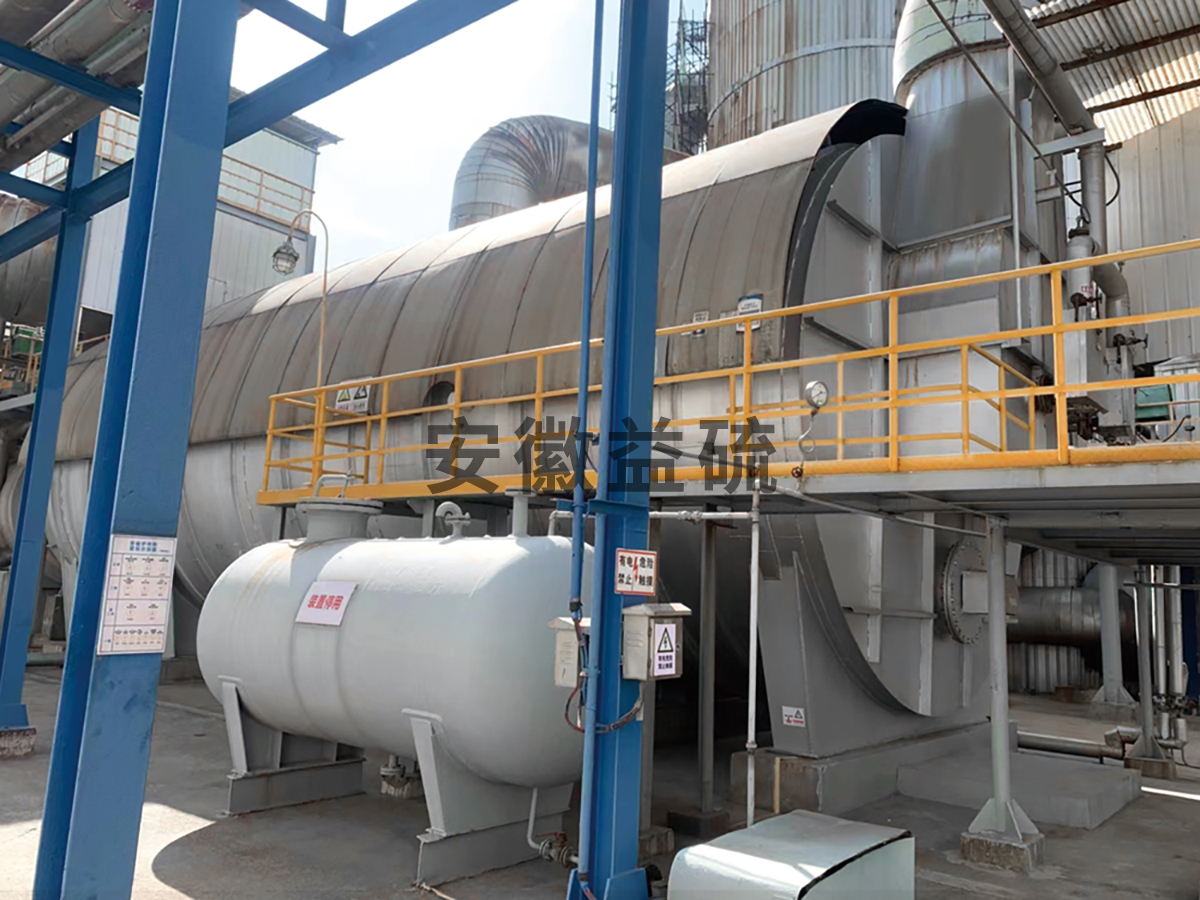
Sulfur incinerator
The sulfur incinerator is a key equipment in the sulfuric acid production process.
A sulfur incinerator is generally a horizontal structure with a steel cylinder lined with refractory bricks and insulation bricks. Multiple retaining walls and secondary air inlets are installed inside the furnace to enhance the mixing of air and atomized particles of liquid sulfur, ensuring complete combustion of liquid sulfur in the furnace.
At present, there are two main forms of sulfur incinerators in China. One is a cylindrical horizontal sulfur incinerator, with each sulfur gun at the furnace head equipped with an air swirl device; Another type is an enlarged horizontal sulfur incinerator, with a double helix structure air inlet device and a large snail shaped swirl device at the furnace head. Several sulfur guns are placed in the middle of the swirl device. On the premise of ensuring sufficient combustion of liquid sulfur, the volumetric heat intensity of the sulfur incinerator has been increased.
The steel shell of the sulfur incinerator is mainly composed of a cylinder, reinforcement rings, manholes, and flat heads at both ends. The cylinder is made of Q345A material and reinforced with Q235B steel plate welded into a reinforcing ring. The pipe mouth mainly includes a primary air inlet, a secondary air inlet, a gas outlet, a burner installation port, a sight glass cooling air inlet, an automatic temperature measurement port, a sight glass, and a liquid sulfur inlet. To prevent rainwater from directly spraying onto the high-temperature outer wall of the furnace and dissipating gas into the environment, a rain cover is installed on the upper half of the sulfur incinerator. For the convenience of maintenance, a manhole is installed at one end of the sulfur incinerator.
Refractory masonry is the main structure of the sulfur incinerator, and the equipment is generally not equipped with external insulation. The insulation of the furnace body is mainly composed of high alumina refractory bricks and high alumina insulation refractory bricks inside.
A bow shaped retaining wall is installed inside the sulfur incinerator to enhance the mixing state of sulfur and air, increase the turbulence level of furnace gas, increase the flow velocity of furnace gas, improve the distribution of furnace gas in the sulfur incinerator, and prolong the residence time. This can promote the full combustion of sulfur in the furnace.
When the masonry is in operation, temperature changes can cause it to shrink and expand. Due to the inconsistency between the expansion amount and the cement shrinkage or residual deformation of the bricks, if no expansion joints are set in the masonry, the internal stress generated will cause the furnace to deform, resulting in the masonry arching and crushing. The principle of setting expansion joints is: they cannot become gaps for furnace gas circulation, cannot weaken the strength of the masonry, and should be evenly separated.
The setting of a swirl device is to ensure sufficient mixing of air and sulfur, while preventing the accumulation of fine charcoal ash near the gas inlet in the lower part of the furnace due to the large dead angle of the airflow inside the furnace, reducing the utilization rate of the furnace, and strengthening the early mixing process to make the gas rotate vigorously inside the furnace. The swirl device generally divides the airflow entering the sulfur incinerator into two parts. One part of the airflow enters the cylinder through the tangential inlet pipe and rotates inside the small conical cylinder, while the other part of the airflow passes through the gap between the inner and outer cones, which is equipped with several spiral blades. After entering, the airflow moves in a spiral motion along each channel.
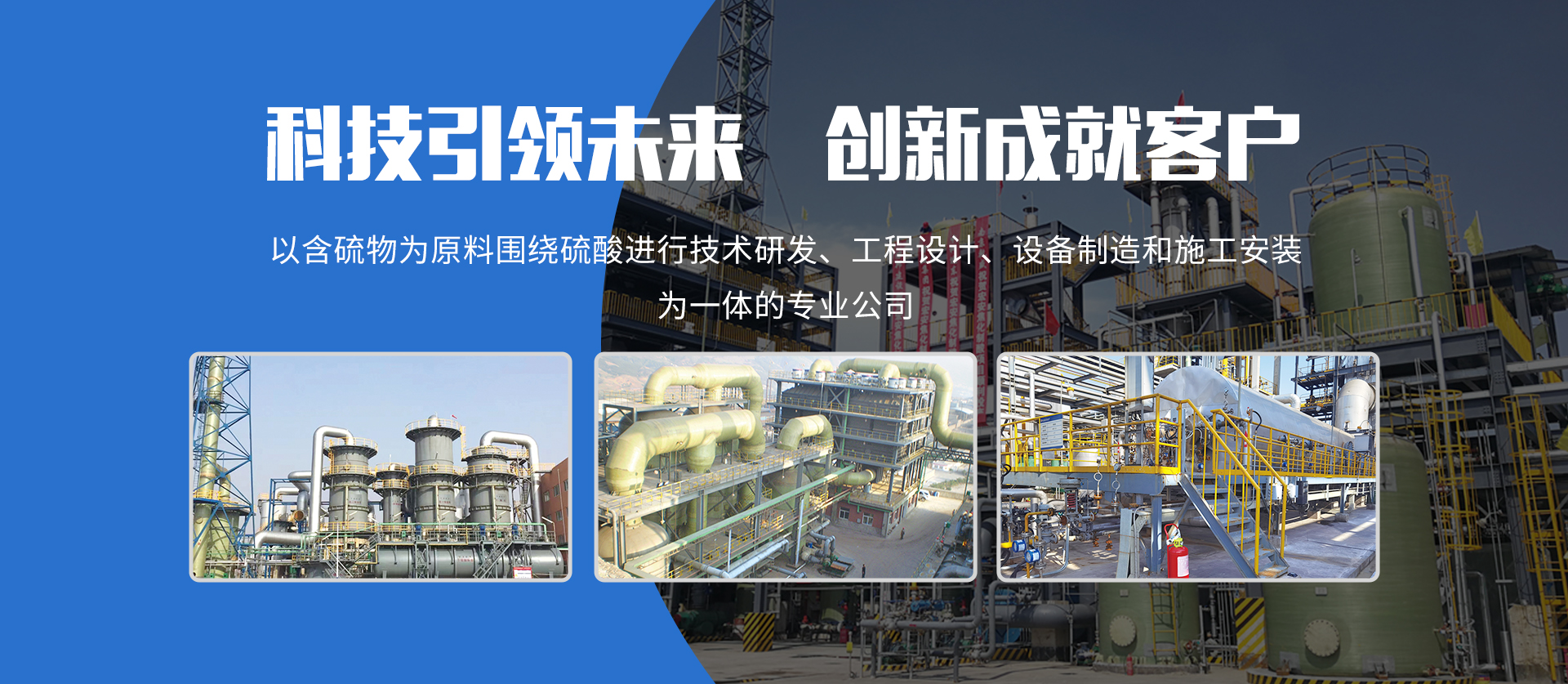
Our company produces sulfur incinerators with a sulfuric acid production capacity of 20000 to 1 million tons per year.
|